Workex Solutions

How to Write SWMS in Minutes
while Staying Compliant

How to Write SWMS in Minutes while Staying Compliant

Using Australian Codes of Practice and ISO Standards, produce a PDF SWMS in minutes from only a job description!
Get Started with Workex

Get Started with Workex

Answer a few questions and get a download
link to the app.

Answer a few questions and get a download
link to the app.

Create Compliant SWMS in Minutes

Create Compliant SWMS in Minutes

Create Compliant SWMS
in Minutes

Workex transforms the way Safe Work Method Statements are created. Instead of spending hours building documents manually, our system generates structured, compliant SWMS documents from a simple job description and a few guided inputs.

Powered by industry Codes of Practice and ISO-aligned safety standards, Workex helps ensure every SWMS reflects the real risks of the job while remaining compliant with Australian regulations.

Workex transforms the way Safe Work Method Statements are created. Instead of spending hours building documents manually, our system generates structured, compliant SWMS documents from a simple job description and a few guided inputs.

Powered by industry Codes of Practice and ISO-aligned safety standards, Workex helps ensure every SWMS reflects the real risks of the job while remaining compliant with Australian regulations.

Job Description*

We'll be installing structural steel beams and columns for a 500m² warehouse extension at the client's distribution center in Campbellfield. Work involves unloading steel members from trucks using a mobile crane.

Our guided workflow captures key safety inputs such as hazardous chemicals, project duration, equipment, and work activities, ensuring nothing critical is missed.

Turn Job Details into a Compliant SWMS

Creating a SWMS begins with a simple job description. Workex uses this information to automatically identify risks, hazards, and equipment requirements.

Because SWMS regulations vary across Australian states and territories, users are prompted to select the job location. This ensures the system applies the correct compliance requirements for that jurisdiction.

Creating a SWMS begins with a simple job description. Workex uses this information to automatically identify risks, hazards, and equipment requirements.

Because SWMS regulations vary across Australian states and territories, users are prompted to select the job location. This ensures the system applies the correct compliance requirements for that jurisdiction.

Smart Equipment Detection

Based on the job description and selected activities, Workex automatically generates a list of equipment likely to be used on the job.

This reduces manual entry and helps ensure the SWMS reflects the real tools and machinery involved. Users can easily add, remove, or modify equipment to match the exact job conditions.

Equipment to be used*

Mobile crane (20-tonne capacity)

Elevated work platforms

Gas cylinders

Levels

Rigging equipment

Tape measures

MIG/stick welders

Review Every Hazard and Control

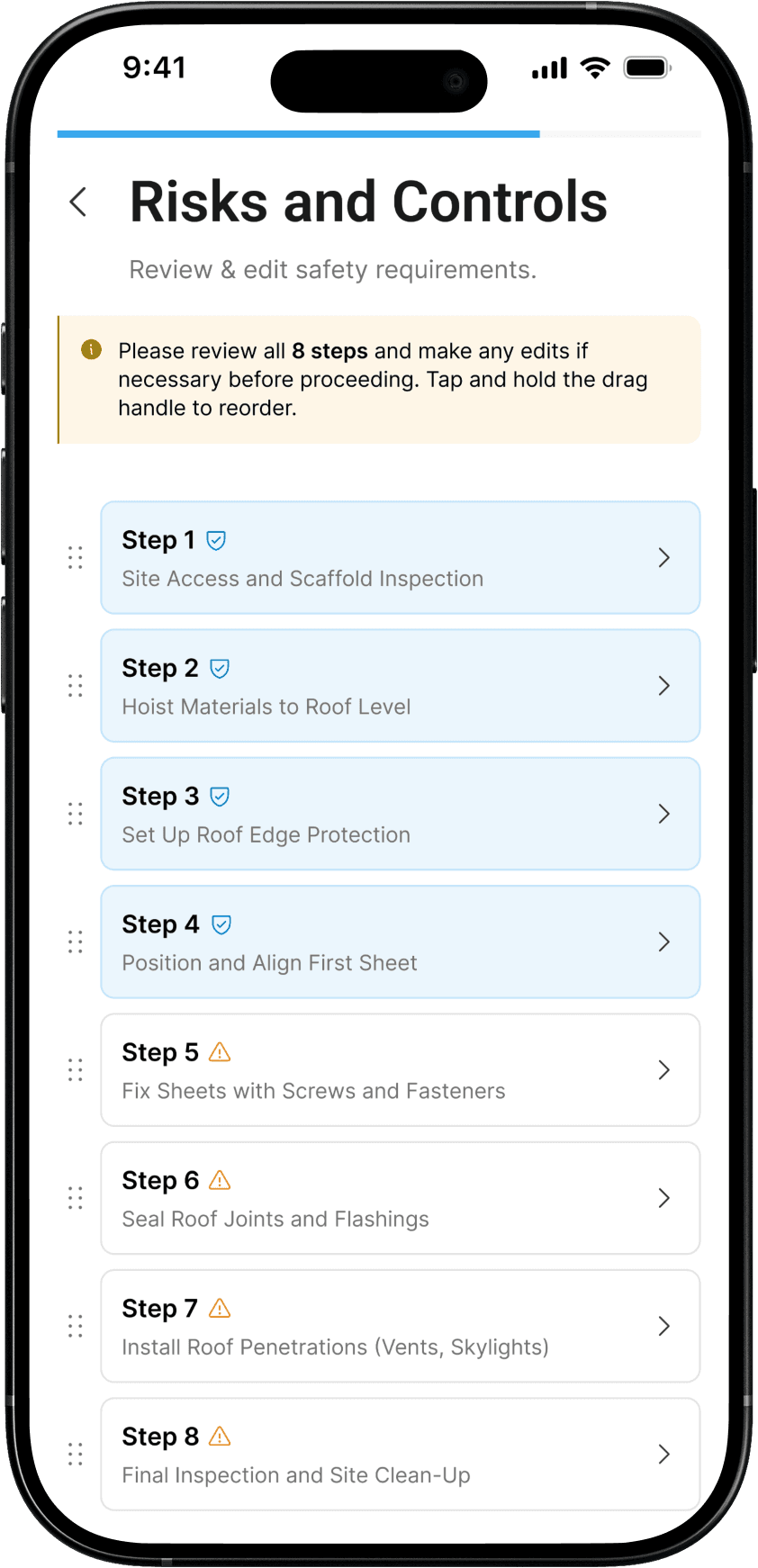
Before finalising the SWMS, users review each step of the job in detail.

This structured review ensures every step of the work has been considered and verified before workers sign off.

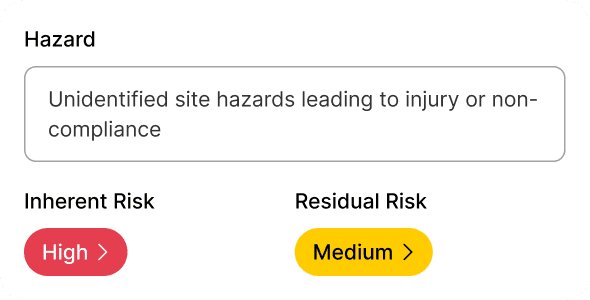
Hazards

Fire/explosion, burns, arc flash

Hazards

Toxic fumes, electrocution

Hazards associated with the task
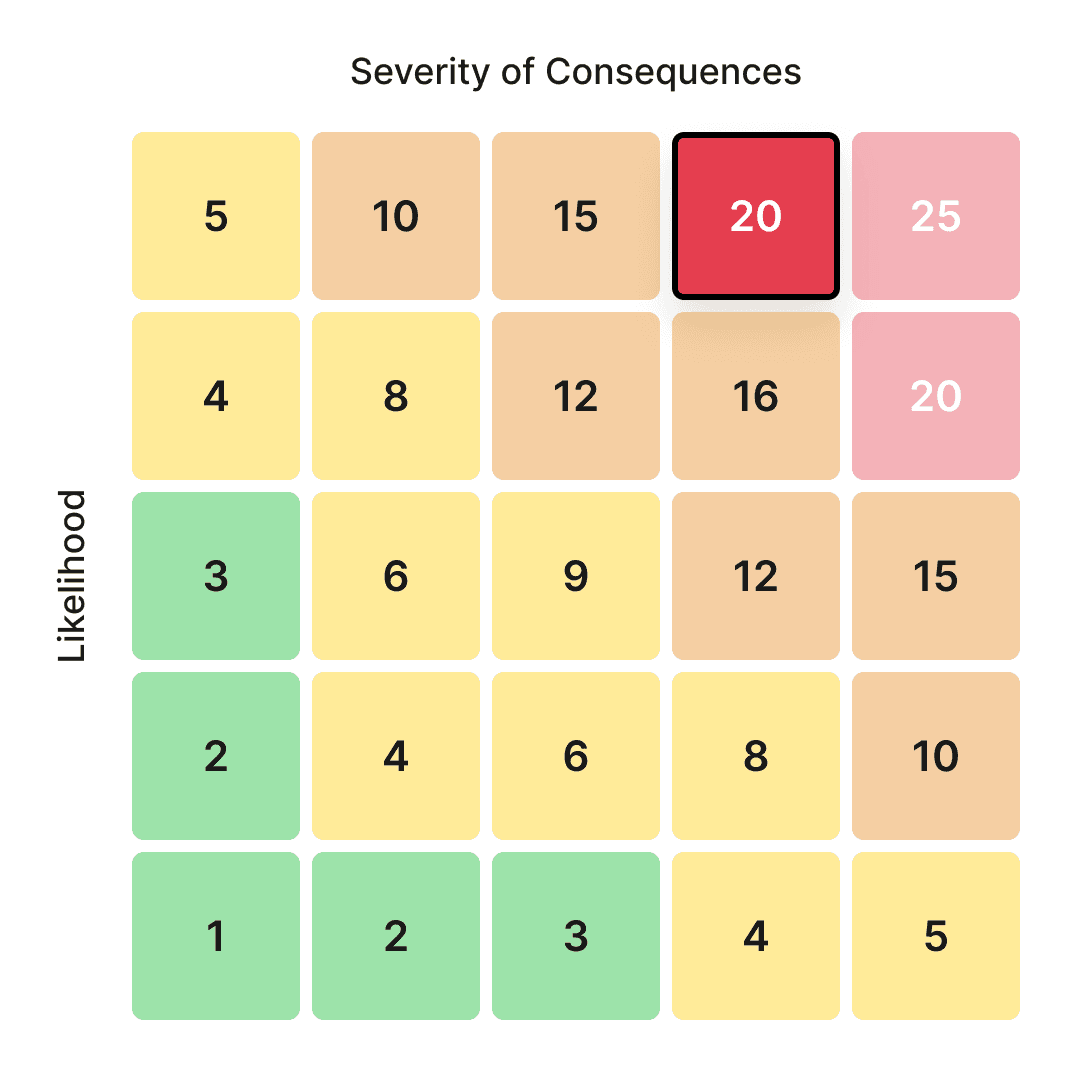
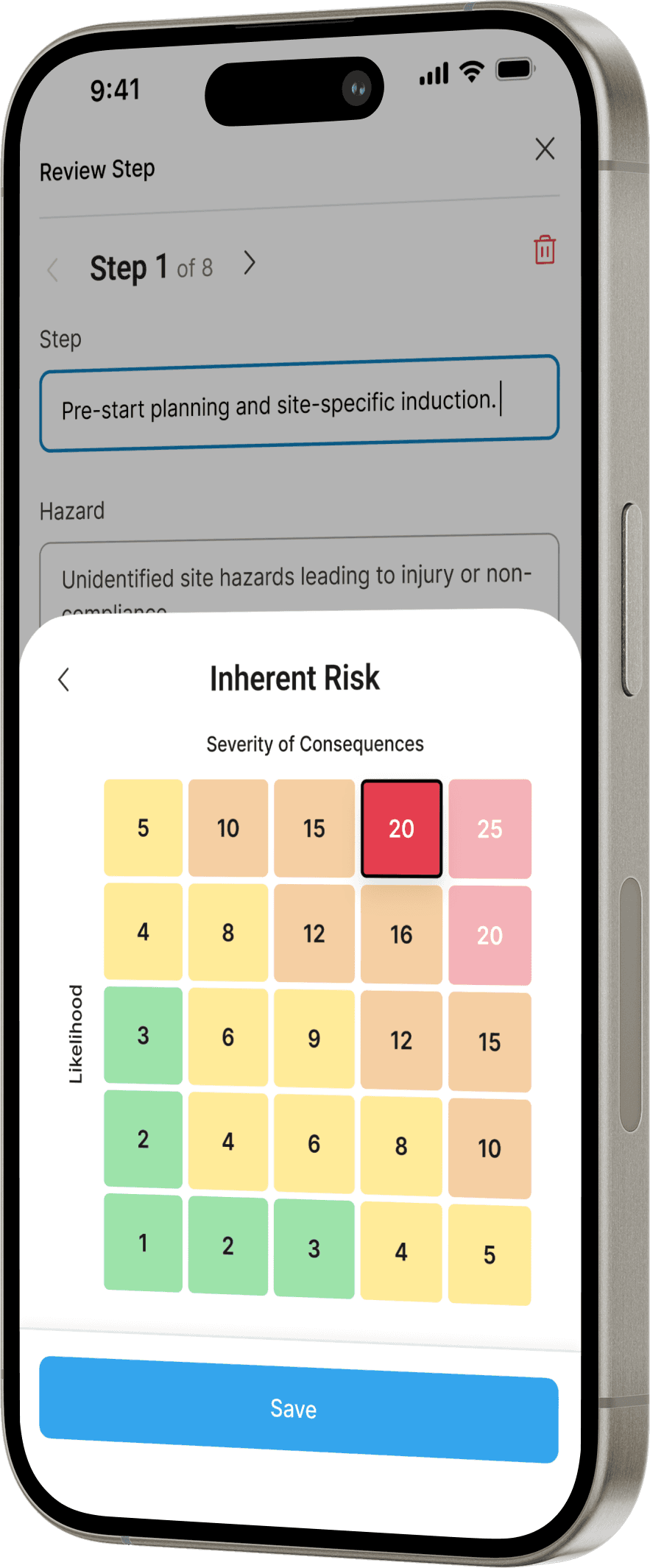
Inherent and residual risk levels

Controls

Verify scaffold design/class & obtain engineering (special conditions, cantilevers, ties)

Recommended control measures

AS

Andrew S. (you)

Person in charge

Person in charge for each task

Smart PPE Identification
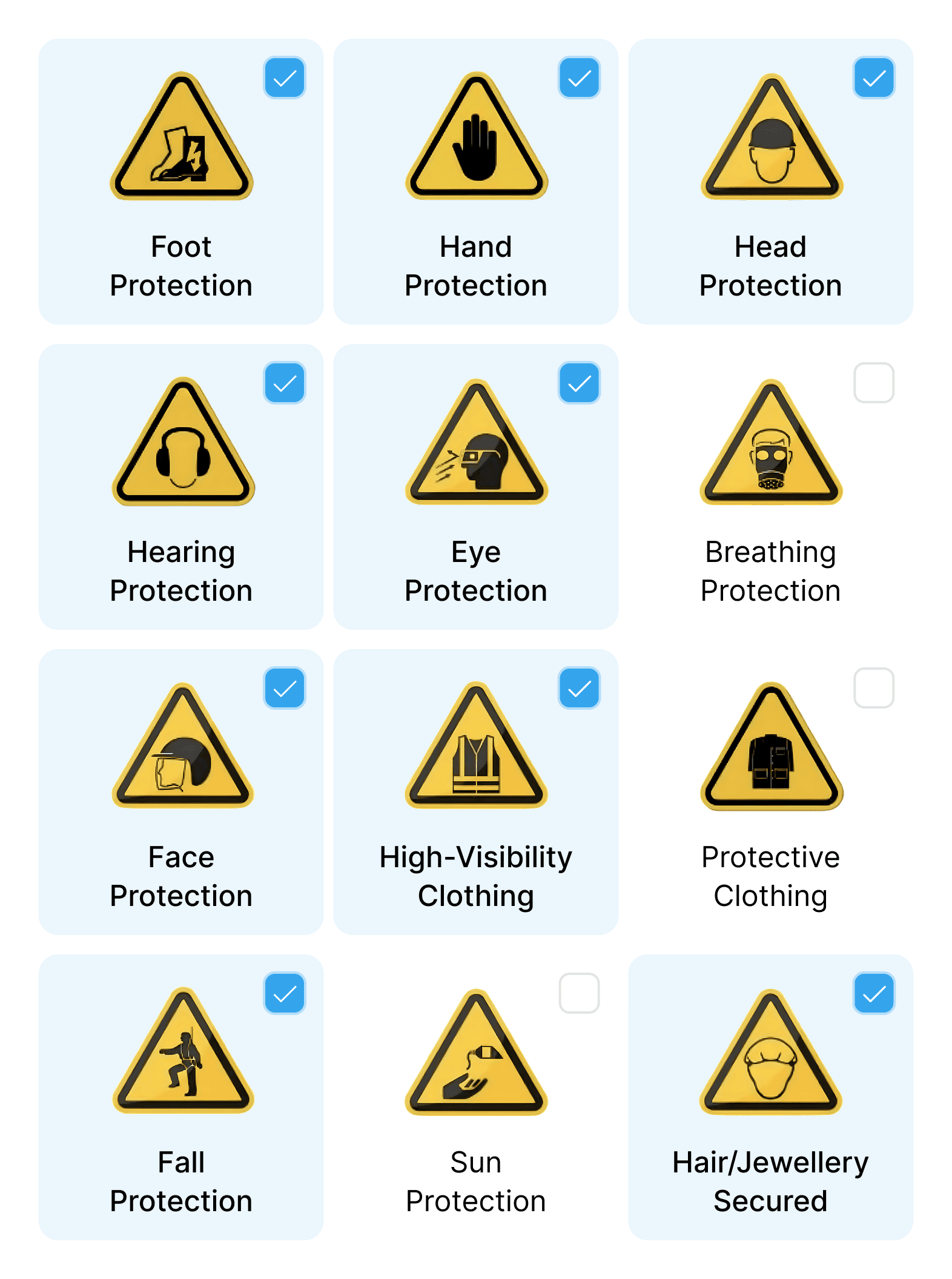
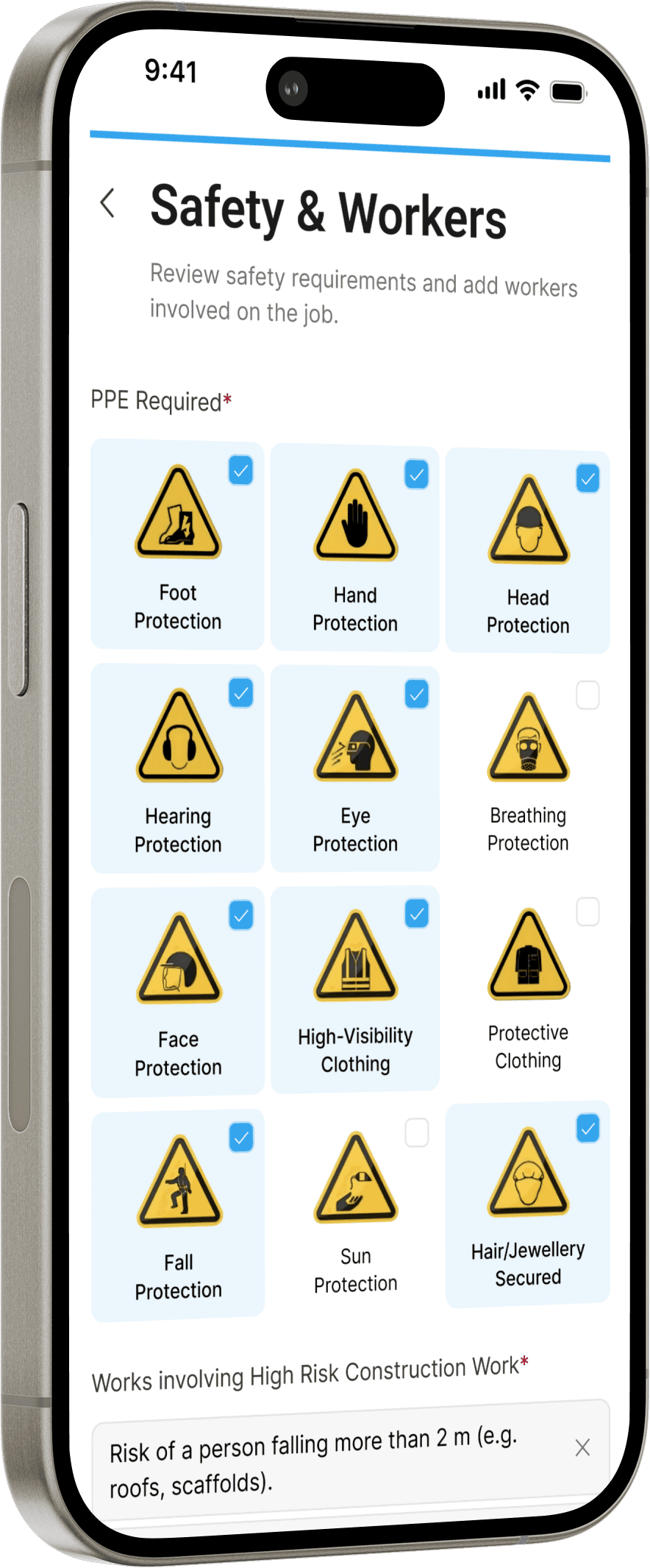
Workex uses smart industry insights to identify the personal protective equipment required for manufacturing tasks based on the selected work activities.

This helps ensure critical safety requirements such as fall protection, hearing protection, or respiratory equipment are clearly highlighted before work begins. Teams can easily adjust these selections to match the real conditions on the factory floor or maintenance area.

Relevant industry standards and Codes of Practice are also surfaced within the workflow, allowing manufacturing teams to reference the underlying safety guidance whenever needed.

Workex uses smart industry insights to identify the personal protective equipment required for manufacturing tasks based on the selected work activities.

This helps ensure critical safety requirements such as fall protection, hearing protection, or respiratory equipment are clearly highlighted before work begins. Teams can easily adjust these selections to match the real conditions on the factory floor or maintenance area.

Relevant industry standards and Codes of Practice are also surfaced within the workflow, allowing manufacturing teams to reference the underlying safety guidance whenever needed.

Frequently Asked
Questions

Find the most commonly asked questions about Workex SWMS.

How are the SMWS compliant?
Can an AI-generated SWMS actually be trusted on site?
What if the SWMS doesn’t match the actual job conditions?
How do I create a SWMS in the Workex app?

2025 © Workex Digital Workflows. All Rights Reserved.

2025 © Workex Digital Workflows. All Rights Reserved.