Skilled Trades
Asset Rich but Production Poor

Created by
Ian Cooper

Many manufacturing facilities look strong from the outside. They have modern machines, upgraded workshops, expensive assets, and production equipment worth millions. On paper, they appear ready for the future. But too many sites are asset rich and production poor.
They have all the gear, but they are losing the people who know how to make that gear perform. That is the real risk facing manufacturing today. It is not always a shortage of equipment. It is a shortage of captured knowledge, practical mentoring, and skilled people who understand how production really works.
For years, experienced tradespeople carried manufacturing sites through breakdowns, shutdowns, changeovers, quality issues, and the daily problems no manual can predict. They knew the sounds of machines, the habits of lines, the shortcuts that were safe, and the warning signs others missed.
Many of them also valued the chance to train an apprentice. Passing knowledge forward was part of the trade culture. It created pride, standards, and continuity. It built master craftspeople over time.
Now many of those workers are leaving industry without leaving a legacy.
When that happens, the loss is bigger than one person. A business loses years of problem solving, machine history, fault patterns, workarounds, and judgement built through experience. New workers inherit the equipment, but not the know how.
That creates a common problem across manufacturing.
Businesses hire qualified trades, but many have never worked inside a production environment. A metal or engineering trade qualification is valuable, but manufacturing has its own skill set that only comes from time on site.
Production lines move differently from Workshops. Downtime costs money by the minute. Fault finding needs urgency. Communication between operations, maintenance, quality, and planning matters. Shift handovers matter. Repeating issues matter. Machine history matters. It all matters..
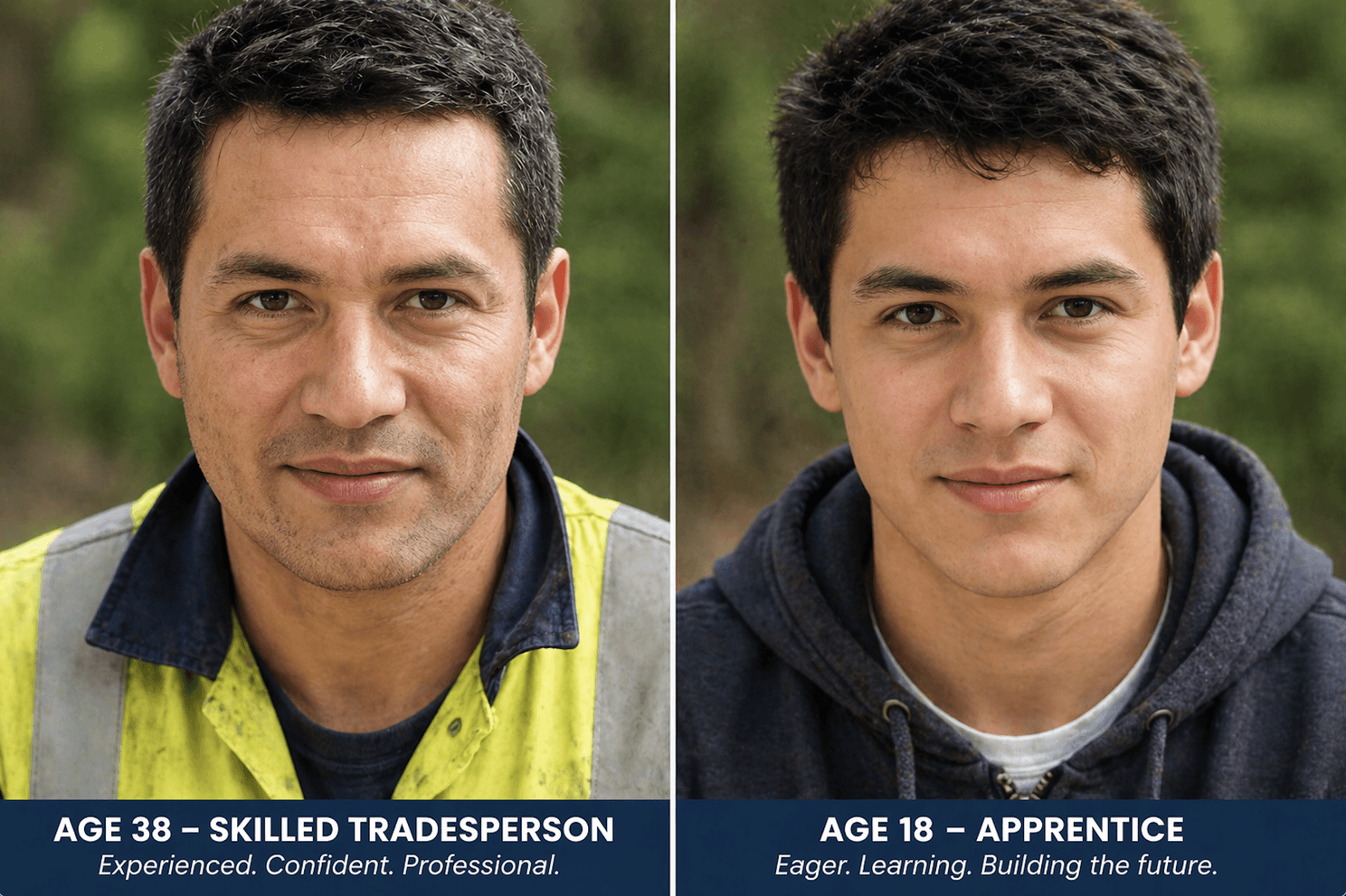
A newly qualified tradesperson and a first year apprentice can both need the same level of support when entering manufacturing for the first time. The setting is different. The pace is different. The expectations are different.
That is why the answer is not simply hiring qualified people and hoping they adapt.
The answer is structured onboarding, practical mentoring, and systems that preserve site knowledge. BINGO!
Forward thinking manufacturers are already recognising this.
They are bringing apprentices back into the sector and rebuilding capability from the ground up. They understand that training is not a cost. It is future production capacity. These businesses deserve recognition because they are helping replenish an industry that has been running lean on people for too long.
But industry should not carry the burden alone. State governments have an opportunity to back manufacturing apprenticeships in metals and engineering, specifically within production environments. If Australia wants sovereign capability, stronger supply chains, and long term industrial resilience, then the workforce pipeline must be supported where real production happens.
At site level, manufacturers also need better ways to hold onto the knowledge they already have.
This is where digital reporting and structured knowledge capture become critical. When trades can log faults with photos, notes, voice input, and machine linked histories, valuable experience stops disappearing. When QR linked assets hold service history and recurring issues, new workers learn faster. When AI supported diagnostics can reference past reports and manuals, teams solve problems sooner. When multilingual tools help diverse workforces communicate clearly, training improves again.
Systems like Workex are designed for exactly this challenge.
They help manufacturers turn everyday maintenance activity into a growing knowledge base that protects experience, supports apprentices, and strengthens production performance over time.
The future of manufacturing will not be won by who owns the most equipment. It will be won by who keeps the knowledge, develops the people, and gives the next generation a chance to become masters themselves.