PCBU Protection
Most Tradies Don’t Hate Safety. They Hate Bad Safety Systems.

Created by
Ian Cooper

Ask most experienced tradespeople whether they want to go home safely at the end of the day and the answer is obvious. They do not want to get injured, they do not want their apprentice getting hurt, and they certainly do not want to be responsible for an incident that affects someone else. Yet across manufacturing, maintenance and construction, there is still a common belief that tradespeople dislike safety procedures, resist compliance and need to be constantly reminded to follow the system.
In many cases, the problem is not safety itself. The problem is the system wrapped around it. When a fitter needs to complete several forms before starting a relatively routine maintenance task, when the same information has to be written three times, or when a permit asks questions that have little connection to the actual job, frustration is predictable. That frustration can easily be mistaken for a poor attitude towards safety when it may actually be a reasonable response to a process that has become harder than the work requires.
When did doing the paperwork become more important than understanding the job?
Safety documentation has an important purpose. A permit to work, Safe Work Method Statement, Job Safety Analysis, Take 5 or isolation procedure should help people stop and consider what they are about to do. It should establish the scope of work, identify hazards, confirm controls and make responsibilities clear before work starts. In higher risk situations, it should also create a formal point where the right people verify that the conditions are safe enough for work to proceed.
The problem starts when completing the document becomes the objective. A tradesperson can fill every box, sign every page and still have a poor understanding of the actual hazards around the job. Conversely, an experienced fitter might have a very strong understanding of the equipment, stored energy, production conditions and required isolation, but spend twenty minutes navigating paperwork that adds very little to that understanding.
Good safety management needs both. Practical knowledge cannot replace proper safety controls, but paperwork cannot replace practical thinking either. The system should bring those two things together rather than allowing one to become a substitute for the other.
If people keep finding shortcuts, it is worth asking why
When workers repeatedly bypass a process, the first response is often to focus on the worker. Sometimes that is justified. Procedures need to be followed and deliberate disregard for critical controls cannot simply be accepted. But if experienced people across different shifts and departments are consistently finding ways around the same process, the process itself deserves attention.
Consider a maintenance fitter responding to a breakdown on a production line. Production is waiting, the supervisor wants an estimated restart time, operators are standing around, and the fitter is trying to diagnose a fault. If the safety process requires them to leave the machine, walk back to a workshop computer, find a document, print it, fill it out, locate an authorised person and then return to the job, the system is creating friction at exactly the point where pressure is already high.
That does not mean the safety steps should disappear because production is waiting. It means the organisation should look at whether those same controls can be completed properly without unnecessary movement, duplication or administration. A good safety system should make the safe way of doing the job the easiest clear path available.
Good safety systems should make people think, not just make them tick boxes
One of the biggest risks with repetitive safety paperwork is familiarity. When workers see the same questions every day, it becomes easy to answer them automatically. The form might ask whether stored energy has been considered, whether appropriate personal protective equipment is available, or whether the work area has been inspected. After completing the same form hundreds of times, the worker can know where every tick belongs before they have properly looked at the job.
Effective safety documentation should encourage the worker to consider the conditions in front of them. What equipment are we actually working on? What can move? What is pressurised? What is hot? What product or chemical could be released? Who else is working nearby? Has production changed anything since the job was originally planned? Does another trade need to become involved?
These questions matter because manufacturing environments change. A maintenance task that was straightforward yesterday may be completely different today because another contractor is working above it, a neighbouring line is operating, an isolation point has changed, or the original fault has exposed another problem. Safety documentation needs to support that reality rather than treating every job as a static administrative exercise.
The person doing the work often knows something the form does not
Manufacturing businesses hold an enormous amount of knowledge in the heads of experienced tradespeople. A fitter who has worked on the same packaging machine for fifteen years may know that a particular guard is awkward to remove, that a pneumatic cylinder can retain pressure after isolation, or that a recurring fault usually has a second cause that is not immediately obvious. An electrician may know which drawings are outdated and which modifications have been made over the years.
That knowledge is valuable for both maintenance and safety, but many safety systems are designed primarily to send information towards the worker. Procedures, permits and instructions tell the worker what the organisation wants them to know. Far fewer systems make it easy for the worker to send practical information back into the organisation.
This is where frontline reporting becomes important. A photo of an unexpected hazard, a note explaining an unusual isolation point, or a maintenance report documenting what was actually found can become useful information for the next person completing the job. Instead of that knowledge disappearing at the end of the shift, it can become part of the equipment history.
A photo can explain what three paragraphs of paperwork struggle to capture
Manufacturing maintenance is highly visual. Damaged guarding, leaking seals, exposed cables, cracked welds, incorrect installations and difficult access points are often easier to understand from a photograph than from a written description. Yet many traditional safety and maintenance systems still rely heavily on text because the process was originally designed around paper forms or desktop computers.
Phone based reporting changes what can realistically be captured from the floor. A worker can photograph the condition, add a short note, identify the equipment and create a record while standing at the job. The objective is not to replace proper documentation with photos. It is to give the documentation better evidence and context.
This becomes particularly useful during shift handovers and follow up work. Instead of being told that there is an issue with the conveyor near Line 4, the incoming tradesperson can see what the previous shift found, what was temporarily repaired, what remains outstanding and what safety concerns were identified. The quality of the handover improves because the information is less dependent on memory or a rushed verbal conversation at shift change.
Disconnected information creates its own safety problem
Many manufacturing sites already capture plenty of information. The difficulty is finding it again. A permit might be stored in a folder, the maintenance report in the CMMS, photos on somebody's phone, the original discussion in a message thread, an equipment manual on a shared drive and the important detail about the last breakdown in the memory of a tradesperson on night shift.
Individually, each system may serve a purpose. Collectively, however, the fragmentation makes it difficult to understand the complete history of a job. This becomes especially obvious when an incident is investigated, a repeat failure occurs, a safety officer needs evidence for an audit, or someone new to the equipment is trying to understand what happened previously.
A more useful digital safety and maintenance system connects the information around the work. The permit, report, photos, equipment details and previous history should be accessible without requiring someone to search through several unrelated systems. QR linked machine histories can also provide a practical entry point, allowing someone standing at a machine to access information relevant to that asset rather than first needing to know where the organisation has stored it.
Digital safety only works if it is actually easier on the floor
Replacing paper with a screen does not automatically create a better safety system. A poorly designed digital form can be more frustrating than paper. If workers need to navigate multiple menus, enter unnecessary information, remember complicated passwords or type lengthy descriptions on a phone, the organisation has digitised the paperwork without fixing the underlying problem.
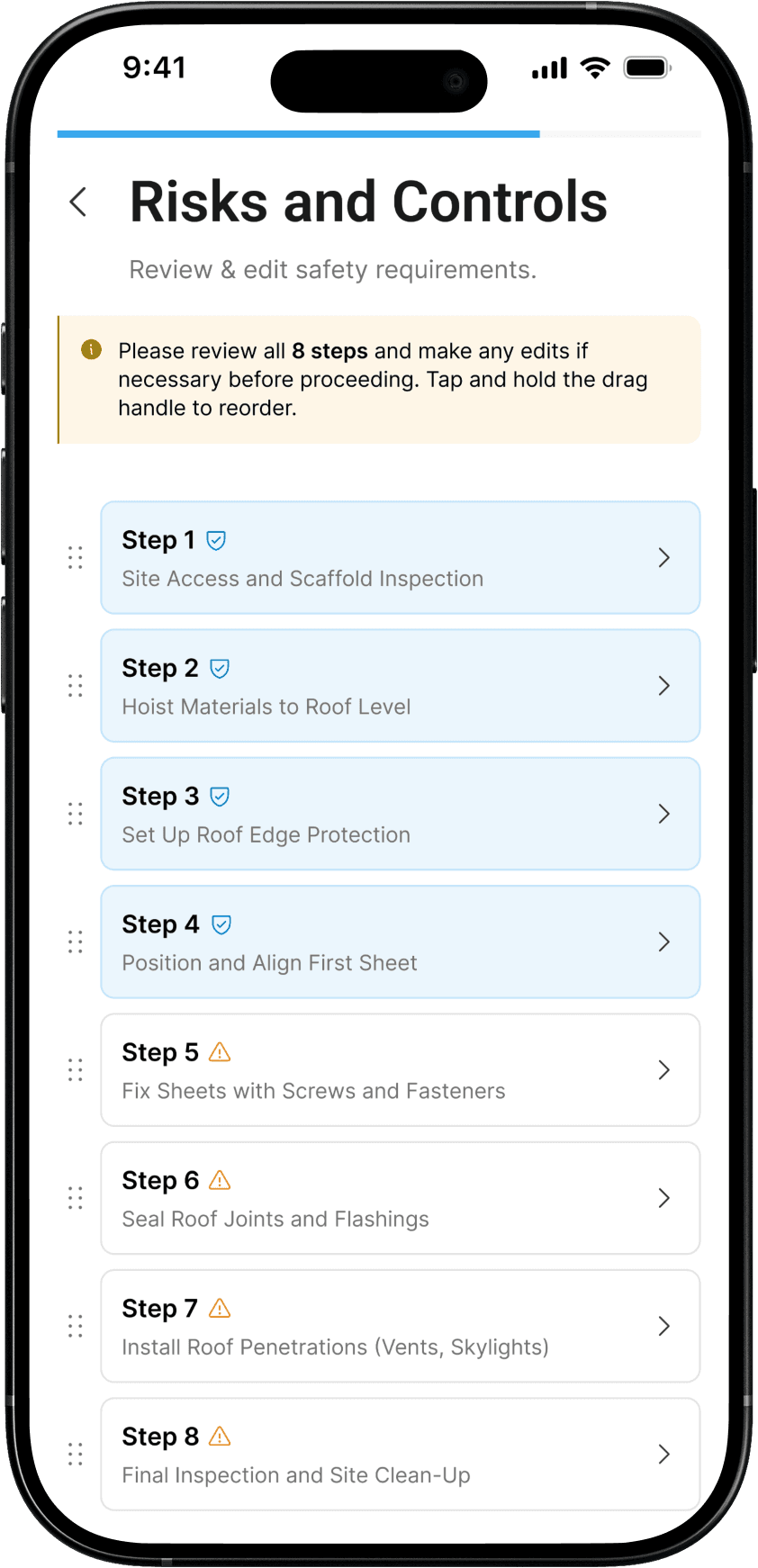
Useful digital permits and safety documentation should reduce unnecessary inputs, automatically populate information that is already known, make photos easy to attach and present questions in a logical order. The worker should spend their time considering the job rather than operating the software.
This is an important principle behind platforms such as Workex. Digital permits, safety documentation, maintenance reports, photos, shift handovers and equipment histories become more useful when they are connected around the actual work. Over time, structured information can also make previous reports, manuals and equipment knowledge easier to retrieve, including through AI supported search and multilingual access where that genuinely helps the workforce.
The real opportunity is preserving what your experienced people know
There is also a longer term issue that manufacturing businesses cannot ignore. Experienced tradespeople eventually leave. They retire, change employers, move into supervision or simply stop working on particular equipment. When their knowledge has primarily been shared through conversations, personal notebooks and memory, a significant amount of operational knowledge leaves with them.
Better frontline reporting creates an opportunity to preserve some of that experience as part of normal work. It does not require a senior fitter to sit in an office for weeks writing procedures about everything they know. Their photos, fault reports, observations, repair notes and equipment history can gradually build a practical record of how the plant has actually been maintained.
That information can support apprentices, new starters, contractors, supervisors and experienced workers who simply have not worked on that particular machine before. It also gives safety and maintenance teams a better foundation for identifying repeat problems instead of treating each breakdown, hazard or corrective action as an isolated event.
A good safety system should help people do the job properly
The measure of a safety system should not simply be how many forms were completed. The better question is whether the system helped people understand the work, identify the hazards, apply the right controls, communicate changes and leave useful information behind for the next person.
Tradies will still complain about paperwork. That is unlikely to disappear completely. But there is a meaningful difference between resistance to safety and frustration with a process that makes safe work unnecessarily difficult. Manufacturing businesses should be willing to recognise that difference.
Good safety systems respect the knowledge of the people doing the work while still providing the structure, accountability and evidence the organisation needs. They make critical controls clear, reduce unnecessary administration and capture what actually happened on the floor. When safety, maintenance and frontline knowledge are treated as connected parts of the same job, the result is not simply better paperwork. It is a safer and more reliable way to operate a manufacturing site.